Template Website vs Custom Website for Small Business: A Practical Guide
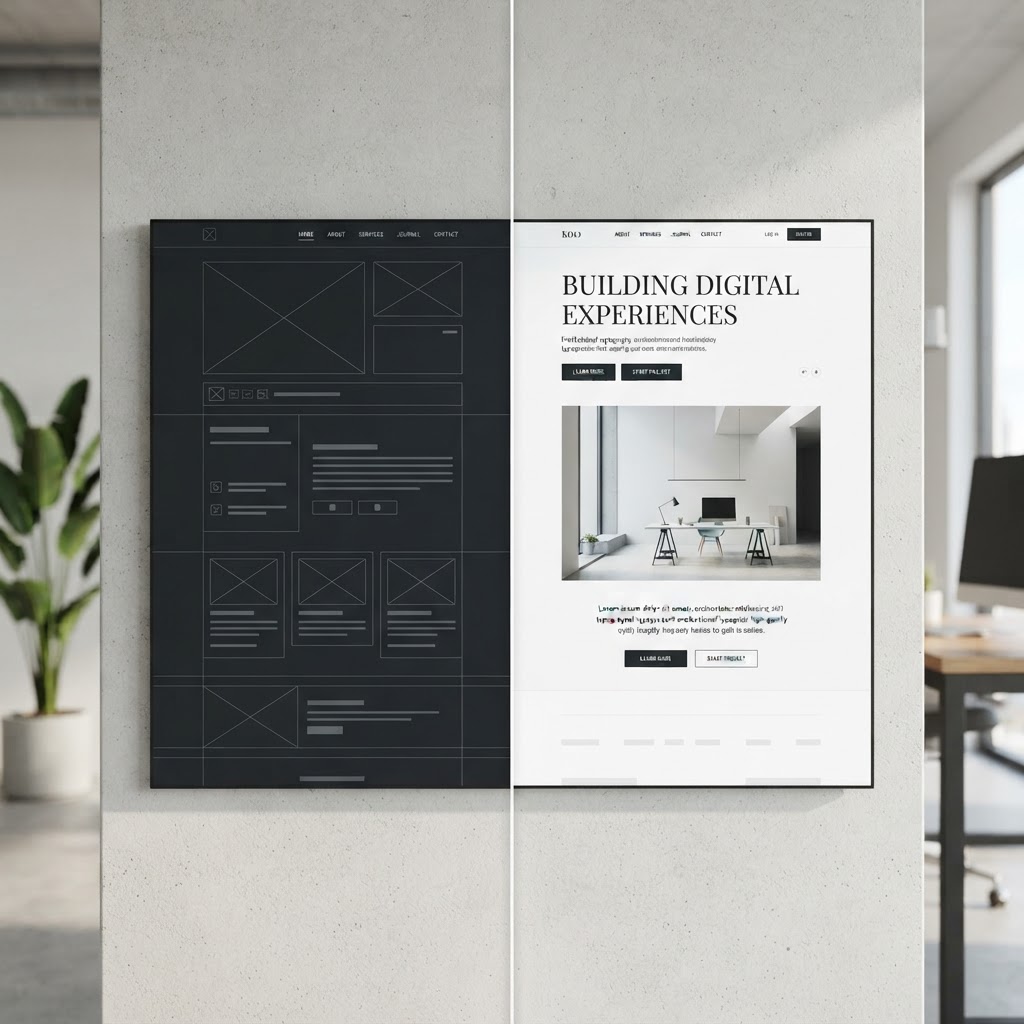
The Reality of the Website Build Decision
If you are running a service business, your website is not just a digital brochure—it is a 24/7 sales representative. When you search for "template website vs custom website for small business," you are likely trying to balance the need for a professional image against the reality of your budget and timeline.
There is no "best" option in a vacuum. There is only the option that fits your current stage of growth. Understanding the difference requires looking past the marketing hype and focusing on how these two approaches impact your ability to capture leads, rank in search engines, and scale your operations.
What is a Template Website?
A template website uses a pre-built framework. You are essentially buying a "house" that has already been designed and constructed; you are simply changing the paint colors, the furniture, and the photos.
The Pros
- Speed to Market: You can launch a template site in days or even hours [6].
- Lower Upfront Cost: Because the heavy lifting of design and structural coding is already done, the initial investment is significantly lower [3, 6].
- Predictability: You know exactly what the layout will look like before you start [6].
The Cons
- Performance Bloat: Templates are often built to be "all things to all people." They come packed with extra code and plugins to support features you may never use, which can slow down your site speed—a critical factor for search engine rankings [3].
- Design Limitations: You are confined to the "box" the template provides. If you need a specific client portal or a unique booking flow, you may find yourself fighting the system to make it work [5].
- Security and Support: Because templates rely on third-party themes and plugins, you are often at the mercy of those developers for updates. If a plugin stops being supported, your site can break or become a security risk [3].
What is a Custom Website?
A custom website is built from the ground up based on your specific business strategy, user journey, and operational needs [6, 7]. Instead of fitting your business into a pre-made box, the "house" is designed around how you actually work [7].
The Pros
- Performance and SEO: Custom sites contain only the code necessary for your specific features. This lean architecture typically results in faster load times and better search engine visibility [7].
- Scalability: As your business grows, a custom site can evolve. You can add complex integrations, custom CRM connections, or unique automation workflows that a template simply cannot handle [5, 10].
- Brand Identity: You are not limited by a theme. Your site can reflect your specific brand voice and visual identity, which helps build trust with high-value clients [5].
The Cons
- Higher Upfront Investment: You are paying for the time and expertise of designers and developers to build a unique product [7].
- Longer Timeline: A truly custom build requires strategy, design, development, and testing phases, which can take several months depending on the complexity [10].
How to Choose: The Decision Matrix
To decide which path is right for you, look at your business through these three lenses:
- Your Growth Stage: If you are a startup validating an idea, a template is a sensible starting point to get online quickly without a massive investment [8]. If you are an established service business with a steady flow of leads, a custom site is an investment in your long-term efficiency [7].
- Your Operational Needs: Do you need a simple "About Us" and contact form? A template is likely sufficient. Do you need to integrate a custom booking engine, a client portal, or automated lead routing? You will likely outgrow a template quickly [5].
- Your Budget vs. Revenue: As noted by industry observers, if your business is generating significant annual revenue, the cost of a custom website is often a small percentage of your total income—making it a logical investment for better conversion rates [9].
Common Mistakes to Avoid
- The "Semi-Custom" Trap: Many agencies sell "custom" sites that are actually just templates with a few colors changed. Always ask to see a portfolio of sites they have built from scratch versus those that are just theme-based [8].
- Ignoring Maintenance: A website is not a "set it and forget it" asset. Whether you choose a template or custom build, you must account for ongoing hosting, security updates, and content management [1].
- Prioritizing Aesthetics Over Function: A beautiful site that doesn't convert visitors into leads is a liability. Focus on the user journey—how easy is it for a customer to book a service or contact you?—rather than just how the site looks.
A Middle Ground: The Foundria Approach
At Foundria, we recognize that most service businesses don't need a $50,000 custom build, but they also shouldn't be stuck with a rigid, slow template that limits their growth. We build and run the digital foundation for service businesses by combining the speed and reliability of modern infrastructure with the strategic, functional requirements of a growing company. We focus on the "digital assembly line"—ensuring your website, CRM, and AI automation work together to capture and convert leads, rather than just sitting there as a static page.
Conclusion
If you are just starting out and need a basic presence, a template is a perfectly acceptable way to begin. However, if your business relies on your website to drive revenue, manage client intake, and scale your operations, a custom approach is almost always the smarter long-term play. Don't let the initial price tag distract you from the true cost of a site that limits your growth or fails to convert your visitors. Choose the solution that matches where your business is going, not just where it is today.
Explore our services